
The Power of Electives: Helping Students Shape Their Interests
In today’s world, students benefit from developing a wide range of skills and interests. One of the best ways to do that is through access to a broad...
4 min read

Online learning offers significant advantages for today’s students. Families explore online education for many reasons, whether they are transitioning from a traditional school, supplementing learning at home, or seeking greater flexibility and academic choice. At the same time, parents often have valid questions. Will teachers be available when students need help? Can students build real relationships? Is online learning academically sound, or simply a temporary alternative to in-person schooling?
These concerns are understandable. Online learning differs from traditional classrooms, but when designed intentionally through a trusted, accredited school, it delivers strong academic outcomes, college readiness, and meaningful student engagement.
This article addresses ten common misconceptions about online learning and explains how high-quality online programs prepare students for college, career, and life.
Families may hesitate about online learning, particularly if their children experienced emergency remote instruction during the pandemic or a short-term school closure. These experiences often created confusion about what online schooling can be. The following misconceptions are common, but well-designed online programs support academic growth and student development.
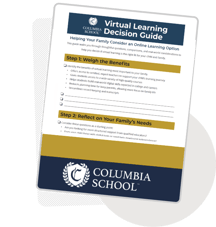
Discover how online learning can support your family’s educational goals and whether it may be the right path for your student.
Download our free Virtual Learning Decision Guide.
In traditional classrooms, teachers are physically present and can provide immediate assistance. Parents may worry that online teachers are less accessible or that communication will be limited.
The truth: Online teachers communicate consistently through structured messaging, feedback on assignments, virtual office hours, and scheduled check-ins. In many cases, students receive more individualized feedback than in a busy classroom!
Benefit: This model encourages students to ask questions, manage deadlines, and take ownership of their learning, skills that are central to college readiness and long-term academic success.
Some families question whether meaningful teacher-student relationships are possible in an online environment.
The truth: Online teachers monitor student progress using engagement data, assessments, and participation indicators. They interact with students through discussion boards, personalized feedback, and one-on-one communication, allowing for early identification of academic or motivational challenges.
Benefit: Students receive timely support and guidance, helping them build confidence, resilience, and problem-solving skills that extend beyond the classroom.
Distance learning can raise concerns about transparency and involvement.
The truth: As an accredited online private school, Columbia School provides clear structures for instruction, communication, and progress monitoring. Depending on the learning model you choose for each course, students may participate in small group live instruction, or independent coursework with instructor feedback. Families have access to secure communication tools, progress dashboards, and academic support services.
Benefit: Parents retain insight into learning while students develop independence, digital communication skills, and accountability, all of which are essential for modern academic environments.
Families often worry that online learning limits experiential instruction, particularly in STEM subjects.
The truth: High-quality online programs use interactive simulations, virtual labs, inquiry-based projects, and data-driven experiments. Students engage in experimental design, analysis, and critical thinking aligned to college-preparatory standards.
Benefit: Students strengthen scientific reasoning and problem-solving skills, preparing them for advanced coursework and future lab-based learning.
Parents may question whether online learning can match the breadth of opportunities available on a physical campus.
The truth: Online learning expands academic access rather than narrowing it. Columbia School offers a broad catalog of courses, including core courses (English, Math, Social Studies and Science), World Languages and Electives. For high school students, we offer Honors, Advanced Placement, and NCAA-approved options. The depth and flexibility of offerings often exceed what a single brick-and-mortar school can provide.
Benefit: Students engage in rigorous academics while maintaining flexibility to pursue interests, extracurriculars, and personal goals outside of school.
Some parents worry they will struggle to navigate online platforms or monitor progress.
The truth: Columbia School uses intuitive learning systems with parent dashboards, tutorials, and ongoing support. No advanced technical skills are required.
Benefit: Parents can easily track progress and performance, while students build digital fluency and self-management skills expected in higher education.
Students who benefit from routine and clear expectations may seem unsuited for online education.
The truth: Online courses include pacing guides, assignment deadlines, and structured expectations. Teachers and advisors support students in developing consistent routines and effective study habits.
Benefit: Students build independence and responsibility while still receiving guidance, a balance that prepares them for both college and professional environments.
Families sometimes assume online coursework is viewed as less credible.
The truth: Most college students now complete at least some coursework online. Colleges value accredited transcripts and increasingly expect students to be comfortable with digital learning platforms.
Benefit: Students with online learning experience often transition more smoothly to postsecondary education, bringing strong self-regulation and time-management skills.
There is a common belief that online learning lacks community.
The truth: Online classrooms emphasize discussion, collaboration, group projects, and individualized feedback. Many students who are quieter in traditional classrooms participate more actively online.
Benefit: Students strengthen communication, collaboration, and critical thinking while developing confidence in academic dialogue.
Families often associate online learning with emergency, short-term solutions.
The truth: Purpose-built online schools are fundamentally different. Columbia School is designed specifically for online instruction, with structured courses, qualified teachers, and intentional student engagement strategies.
Benefit: Students learn in a cohesive, well-supported environment that prioritizes mastery, independence, and sustained academic growth.
Online learning is not a compromise. When delivered through an accredited, high-quality school, it is a strategic approach to preparing students for college, career, and life. Online learning helps students:
Online programs at Columbia School expand educational opportunity while maintaining academic excellence and clear expectations.
Ready to explore online learning options? Learn how Columbia School can support your student’s educational journey by visiting columbiaschool.org and joining us at an upcoming online Open House.
In today’s world, students benefit from developing a wide range of skills and interests. One of the best ways to do that is through access to a broad...

A few years ago, the idea that a high school athlete could earn money from a social media post or a local endorsement would have ended a career...
%20takes%20the%20puck%20out%20of%20the%20zone%20against%20Delbarton%20during%20the%20first%20round%20of%20the%20Gordon%20Cup%20at%20the%20Ice%20Vault%20on%202_25_21_-1.png)
For many student-athletes, pursuing a dream at the highest competitive levels often means a difficult choice between academics and athletics. Hockey...